
Unibet casino Plinko game
Introduction: what Unibet casino Plinko actually offers
Plinko looks almost too simple to deserve a long analysis. You choose a stake, set a risk level, drop a ball, and watch it bounce through a field of pegs until it lands in a payout slot. That surface simplicity is exactly why the format deserves a closer look. In practice, Unibet casino Plinko is not just a quick-click casino game with a clean interface. It is a probability-driven experience where session tempo, emotional swings, and outcome distribution can change sharply depending on the settings a player chooses.
I have seen many players approach Plinko as if it were a lighter version of a slot. That is usually the first mistake. The game does not hide its logic behind reels, paylines, symbols, or bonus rounds. Instead, it puts randomness in plain sight. Every drop feels transparent, but that transparency can be misleading if a player assumes visible movement means visible control. It does not. The path is easy to follow with the eye, yet the underlying expectation remains governed by math.
That is why this page matters. If you want to understand whether Plinko at Unibet casino is worth trying, the useful question is not “Is it exciting?” but “What kind of excitement does it create, and what does that mean for a real session?” In Canada, where players often compare fast casino formats with slots, Unibet Casino live casino games page tables, and instant-win style products, Plinko stands out because it compresses tension into a few seconds and makes variance feel unusually visible.
What Plinko is and why it keeps drawing attention
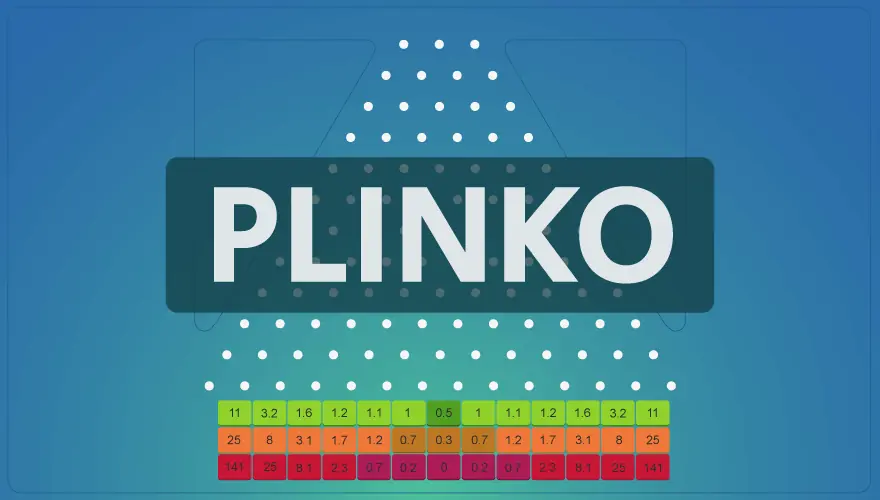
At its core, Plinko is a drop-based chance game. A ball falls from the top of a vertical board, hits a sequence of pins, shifts left or right at each contact point, and eventually lands in one of several multiplier slots at the bottom. Your final result depends on where the ball ends its path. Low multipliers tend to sit near the center, while the bigger headline multipliers are usually placed toward the edges.
The reason Plinko attracts so much attention is not just speed. It is the combination of visual clarity and outcome suspense. In a slot, the result appears when the reels stop. In Plinko, the result develops in front of you. That small difference has a big psychological effect. Even though the outcome is still random, the bouncing path creates the feeling that something is unfolding rather than merely being revealed. The full picture of payment methods lives in Unibet Casino crash games guide for Canadian players, including the less common ones.
There is another reason the format became so noticeable. Plinko creates highlight moments very efficiently. A rare edge landing with a high multiplier is easy to understand instantly, even for someone who has never played before. This makes the game highly watchable and highly shareable. But from a player’s point of view, that visibility can distort expectations. The spectacular outcomes are real, yet they are not the typical session pattern. Most drops cluster around modest returns or losses, especially when higher risk settings are active.
One of the most interesting things about Plinko is that it turns randomness into a performance. You can literally watch chance bounce its way downward. That makes the game easier to grasp than many casino products, but not necessarily easier to judge correctly.
How the Plinko mechanic works in practical terms
To understand Unibet casino Plinko, it helps to strip the format down to its essentials. Before each drop, the player usually chooses a bet amount and a risk level. In some versions, there may also be an option related to board size or number of rows. Then the ball is released from the top and starts colliding with pegs. At each collision, it shifts left or right. By the time it reaches the bottom, those tiny directional changes determine which multiplier is applied to the stake.
That sounds straightforward, and in one sense it is. But the practical meaning of each setting is where the real game begins.
| Element | What it changes | What it means for the player |
|---|---|---|
| Bet size | Base amount per drop | Directly affects session cost and emotional pressure |
| Risk level | Multiplier distribution across the board | Changes how often smaller returns appear and how rare top outcomes become |
| Rows or board depth | Number of bounce decisions before landing | Can alter session feel and spread of possible landing zones |
| Auto-play or repeated drops | Session speed | Makes bankroll movement faster and can reduce decision quality |
The central mechanic is this: the more aggressively the paytable is structured, the more the game shifts away from frequent modest outcomes and toward rarer, more dramatic hits. This is where many players underestimate Plinko. Because the interface is minimal, they assume the game is casual by nature. In reality, a high-risk Plinko setup can feel sharper and more punishing than many mainstream slots.
Another important point is that visible ball movement should not be confused with pattern reading. Players sometimes try to “see” trends in left-heavy or right-heavy drops, especially after a sequence of central landings. That instinct is understandable, but it does not create an edge. Each drop is still governed by random outcome logic. The board is a visual delivery system, not a strategic map. Those comparing loyalty perks can weigh this section against Unibet Casino cashback bonus review for mobile bonus and cashier checks.
Why the session rhythm feels so different from a slot
The rhythm of Plinko is one of its defining strengths. A single round is short. There is no reel spin build-up, no scatter anticipation, no feature trigger sequence, and no side game to interrupt the core cycle. You click, watch, and get the result. That makes the format clean, but also deceptively intense.
In a slot session, pacing often comes from waiting for something larger to happen: a bonus round, expanding symbols, free spins, or a multiplier chain. In Plinko, the pacing comes from repetition and contrast. Most drops resolve quickly, and the brain starts scanning for deviation from the center. The moment a ball drifts unusually far toward the edge, tension spikes.
This creates a very specific style of engagement:
- The player receives results quickly.
- The visual path gives each result a small narrative arc.
- The rare high-multiplier route becomes the emotional anchor of the session.
That three-part loop is efficient. It is also why bankroll can move faster than some players expect. The game does not need long rounds to create momentum. It creates momentum by compressing anticipation into seconds and repeating that cycle over and over.
A useful observation here is that Plinko often feels calmer than it really is. The board looks tidy. The controls are limited. There is no loud reel clutter. Yet the session can become aggressive very quickly if stake size and drop speed are not controlled. Minimalist presentation should not be mistaken for low intensity.
Risk levels, probabilities, and what they mean in a real session
If there is one setting that defines the player experience in Unibet casino Plinko, it is the risk level. This option changes how the multiplier values are distributed. Lower-risk settings usually place more weight on smaller, more frequent returns. Higher-risk settings widen the spread, making the best multipliers more attractive on paper while reducing how often they are reached.
This is where Plinko becomes more than a visual novelty. The same board can produce completely different session profiles depending on this one choice.
| Risk setting | Typical session feel | Main trade-off |
|---|---|---|
| Low | More stable, less dramatic | Fewer standout returns, smaller upside |
| Medium | Balanced but still swingy | Can create mixed expectations if the player wants either stability or extremes |
| High | Sharp variance, rare standout landings | Long dry stretches become more likely |
What matters in practice is not just whether the top multiplier exists, but how often the rest of the board pays in relation to your stake. A player who focuses only on the biggest number at the edge is ignoring the actual session economy. Most of the time, the bankroll is shaped by the ordinary landings, not the exceptional ones. Table game fans will get more out of this review after reading real money free chips guide for Unibet Casino players.
There is also an important difference between possible result and expected experience. Plinko is very good at displaying possibility. It is less generous in delivering those headline moments regularly. That gap between visible upside and typical session reality is where many players misread the format.
Another memorable truth about Plinko is this: the board teaches patience badly. Because every drop is short and every big multiplier is visible from the start, the temptation to chase a dramatic outcome can arrive much faster than in slower casino formats.
Who Plinko suits, and when it may be the wrong choice
Plinko is not a universal fit. It suits players who enjoy immediate resolution, simple controls, and a direct relationship between stake, randomness, and outcome. If you like seeing the path to the result instead of waiting for layered slot features, this format can be genuinely appealing.
It is often a good match for players who:
- Prefer short rounds and fast feedback.
- Want a casino format that is easy to understand without a long learning curve.
- Are comfortable with visible variance and can accept long stretches without a standout landing.
On the other hand, Plinko may not suit players who want depth through features, themed presentation, or evolving round structure. If your enjoyment comes from bonus rounds, symbol interactions, free spin sequences, or strategic table-game decisions, Plinko can start to feel narrow after the initial novelty wears off.
It may also be a poor fit for players who confuse simplicity with safety. A low-complexity interface does not guarantee a gentle bankroll curve. In high-risk mode, the experience can be abrupt and unforgiving.
What players should understand before launching Plinko at Unibet casino
Before starting a session, I would focus on a few practical points rather than broad promises. These are the details that actually shape the experience.
First, decide what kind of session you want. If the goal is to stretch playtime and observe the mechanic without heavy swings, lower-risk settings and modest stakes make far more sense. If the goal is to chase a rare multiplier, accept in advance that the session may become expensive quickly relative to entertainment time.
Second, treat speed as part of the stake. This is easy to overlook. In Plinko, a fast session does not just mean more action. It means more exposure. Even small bets can add up quickly when drops resolve in rapid succession. Auto-play can make that problem worse because it removes the pause where players normally reassess.
Third, do not assign meaning to recent paths. A series of central landings does not make an edge landing “due.” A run of left-heavy movement does not predict a shift right. The visible nature of the board encourages pattern hunting, but that habit can distort judgment.
Fourth, understand that Uni bet casino or any branded version of Plinko should be judged by the actual rule set available on the page, not by clips, screenshots, or stories from other sessions. Risk options, top multipliers, and board configuration can materially change how the game behaves from the player’s perspective.
How Plinko differs from slots and other casino games
The easiest comparison is with classic online slots, but the differences are more substantial than they first appear. Slots are built around symbol combinations, reel architecture, and layered feature design. Plinko is built around distribution. A slot often asks the player to wait for triggers. Plinko asks the player to repeat a short random event and live with its spread of outcomes.
Here are the main differences that matter in practice:
- Visibility of randomness: in Plinko, chance is animated as a path. In slots, chance is mostly concealed behind the spin result.
- Session structure: Plinko has a flat loop with no true bonus-round architecture. Slots often rely on changing states and feature escalation.
- Cognitive load: Plinko is easier to read immediately. Slots usually require more interpretation of paylines, symbols, and modifiers.
- Pacing profile: Plinko resolves faster and can generate more decisions per minute.
Compared with roulette, Plinko shares some appeal around simple input and uncertain output, but the emotional texture is different. Roulette presents a single clean event. Plinko creates suspense through movement. Compared with crash-style games, Plinko is less about cash-out timing and more about accepting a completed random path. Compared with blackjack or baccarat, it offers no meaningful decision depth once the drop begins.
That is why Plinko often appeals to players who want something between a slot and an instant game. It has more visual drama than a plain number draw, but less structural complexity than a feature-heavy reel product.
Strengths and weak points of the format
From an analytical point of view, Plinko has several clear strengths. The first is accessibility. A new player can understand the basic logic almost immediately. The second is tempo. The format wastes very little time between action and result. The third is transparency of feel. Even though the math remains random, the player can see the route the outcome takes, which gives the game a distinct identity.
There are also practical limitations.
The biggest one is repetition. Because the core loop barely changes, some players will find that the format peaks early. Once the initial suspense of the bouncing path becomes familiar, there is not much structural variety to take its place. Another limitation is expectation management. High multipliers are visually prominent, which can make the overall experience feel more generous in theory than it is in repeated play.
I would summarize the balance like this:
- Strong points: fast rounds, easy onboarding, visible outcome path, clear risk customization.
- Weak points: limited long-session variety, easy to over-speed, strong temptation to chase rare edge outcomes.
One more subtle drawback deserves mention. Because Plinko looks so understandable, players may become overconfident about reading it. In many slots, complexity reminds the player that the system is opaque. In Plinko, the opposite happens: the board looks so legible that some players start believing they can sense when a bigger result is approaching. That illusion is part of the format’s charm, but it is also one of its traps.
Practical checkpoints before you start a session
If I were advising a player considering Unibet casino Plinko in Canada, I would reduce the decision to a few practical checkpoints:
- Choose your risk level before thinking about top multipliers. This determines the real tone of the session.
- Set a stake that matches the speed of the game. Fast rounds magnify even modest bets.
- Use demo access if available. It helps you feel the rhythm without attaching money to every bounce.
- Do not chase the edge slots emotionally. They are the headline, not the baseline.
- Know what you want from the session. If you want layered entertainment, a slot may fit better. If you want short, direct suspense, Plinko makes more sense.
That last point is more important than it sounds. Many disappointing sessions happen not because the format is weak, but because the player expected a different kind of engagement. Plinko is not trying to be a story-driven slot or a strategic table game. It is offering a distilled form of chance, presented in a way that feels vivid and immediate.
Final verdict: is Unibet casino Plinko worth trying?
Unibet casino Plinko offers a very specific casino experience: short rounds, visible randomness, adjustable risk, and a session rhythm built around repetition rather than feature progression. Its strongest quality is clarity. You can understand what is happening almost instantly. Its second major strength is tension efficiency. Few casino formats create such quick bursts of suspense with so little interface clutter.
That said, the game deserves caution precisely because it looks so simple. The cleaner the format, the easier it is to underestimate how quickly variance and session speed can affect bankroll. High-risk settings can produce a much harsher experience than casual players expect. The biggest multipliers are part of the appeal, but they should not be mistaken for the normal shape of play.
Who is it for? Players who enjoy rapid outcomes, direct mechanics, and a transparent-looking form of chance will likely find real value in Plinko. Who may want something else? Players who need narrative features, strategic input, or more variety across a long session may get bored or frustrated.
My bottom-line view is simple: Plinko is worth trying if you want a casino format that strips gambling down to movement, distribution, and tempo. It is not deep in the way slots or table games can be deep, but it is sharper than it first appears. That contrast is the whole point of the format. Plinko looks light. In practice, it can be one of the clearest lessons in how visible simplicity and real variance are not the same thing.
FAQ
What is the goal in Plinko ball drops?
The goal is to launch the ball so it lands in higher-value multiplier zones at the bottom. Each drop follows the board physics, so results depend on the path the ball takes.
Where does Plinko multipliers appear during the game?
Multipliers are shown in the result areas and may also be previewed through the table or side panel. After each ball lands, the multiplier tied to that landing zone is applied to the round.
How does a Plinko round work from the moment the ball is released?
The ball is dropped from the launcher, bounces off pegs, and rolls toward the scoring section at the bottom. When it settles, the game calculates the multiplier based on the landing zone. The round ends after the result appears, and the total is reflected in the round history.
How does Plinko compare to live casino tables like roulette or blackjack?
Plinko is a single-game style experience powered by game mechanics rather than a live dealer. Roulette and blackjack involve dealer interaction and their own table rules, while Plinko focuses on ball physics and multiplier zones. Those who prefer quick round cycles often choose Plinko for faster gameplay.
What common beginner mistake happens in Plinko, and how can it be avoided?
A common mistake is assuming the ball path can be controlled precisely, then placing higher stakes too quickly. Focus on understanding how the board reacts to the selected risk or stake, and start with a small bet while learning the pacing of each drop.